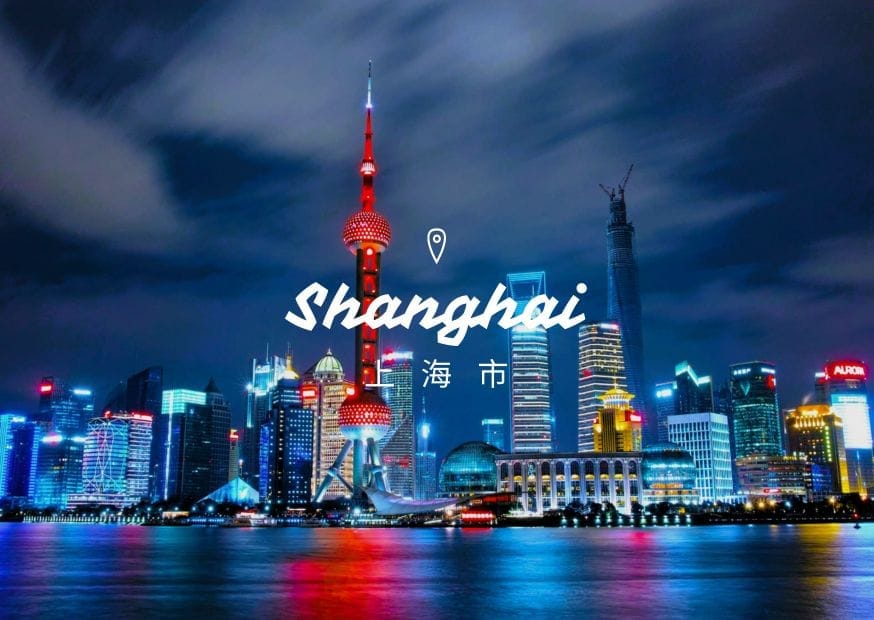

Shanghai is one of the most photogenic cities in Asia — a 19th-century colonial-era Bund, a 21st-century Pudong skyline, classical Chinese gardens, neon-soaked shopping streets, and atmospheric narrow lanes. Hotel Chalet Shanghai’s Huangpu District location puts 9 of the 10 best photo spots within a 25-minute walk. This guide covers every spot, the right camera settings for each, what gear to bring, what gear to leave at home, and the small etiquette rules that matter.
🏨 편집 가이드
📷 The Right Camera Gear — Phone vs Real Camera
For 80% of travelers, a recent smartphone — iPhone 13 or later, Samsung Galaxy S22 or later, or any current flagship from Xiaomi, Huawei, Oppo, or Google — is enough camera for Shanghai. Modern phone cameras handle good light beautifully, and even challenging low-light shots (Nanjing Road neon at night, the Bund at blue hour) can be done with a phone if you brace against a wall and use night mode.
For the 20% of travelers who want print-quality shots, the editor-recommended kit:
- 📸 Body: a mirrorless camera — Fujifilm X-T5, Sony A7 IV, Canon R6 II, Nikon Z6 II. Crop-sensor or full-frame both work.
- 🔭 Lens 1 (always on camera): a fast normal prime — 23mm f/1.4 (35mm equivalent) for APS-C, or 35mm f/1.4 for full-frame. Covers 80% of the keepers.
- 🔭 Lens 2 (for portraits and details): a 56mm f/1.2 (85mm equivalent) for APS-C, or 85mm f/1.8 for full-frame.
- 🔋 Two batteries and a 64 GB+ SD card. Hotel Chalet has power outlets everywhere.
- 🎒 A small shoulder bag, not a backpack. Backpacks are awkward in the Bund crowd and the Yu Garden pavilions.
What to leave at home: tripods (awkward in crowds; brace against railings instead), flash units (forbidden in museums and theaters), drones (forbidden entirely in central Shanghai — see FAQ).
📍 The Top 10 Photo Spots, Ranked
| Spot | Distance from hotel | Best time | Best lens | 다음에 가장 적합 |
|---|---|---|---|---|
| Bund waterfront (middle section) | 1.2 km / 15-min walk | Sunset + 30 min | 24–35mm wide | Pudong skyline panorama |
| Bund waterfront (Garden Bridge north end) | 1.8 km / 23-min walk | Blue hour | 16–24mm wide | Skyline with bridge foreground |
| Yu Garden dragon wall | 1.8 km / 22-min walk | 14:00–16:00 | 50–85mm portrait | Architectural detail |
| Yu Garden Grand Rockery | 1.8 km | 14:00 (afternoon side light) | 24mm wide | Garden landscape |
| Nanjing Road neon | 620 m / 8-min walk | After 19:00 (neon on) | 24–35mm wide | Street life, neon signage |
| Shanghai Museum exterior | 1.0 km | Blue hour | 16–24mm wide | Architecture, building shape |
| Shanghai Grand Theatre exterior | 1.3 km | After 18:00 | 16–24mm wide | Architecture, lit facade |
| People’s Square pigeons | 400 m | 08:00–10:00 | 50–85mm portrait | Slice of life |
| Hankou Road historic buildings | On hotel’s street | 09:00–11:00 | 24–35mm wide | Architecture walk-by |
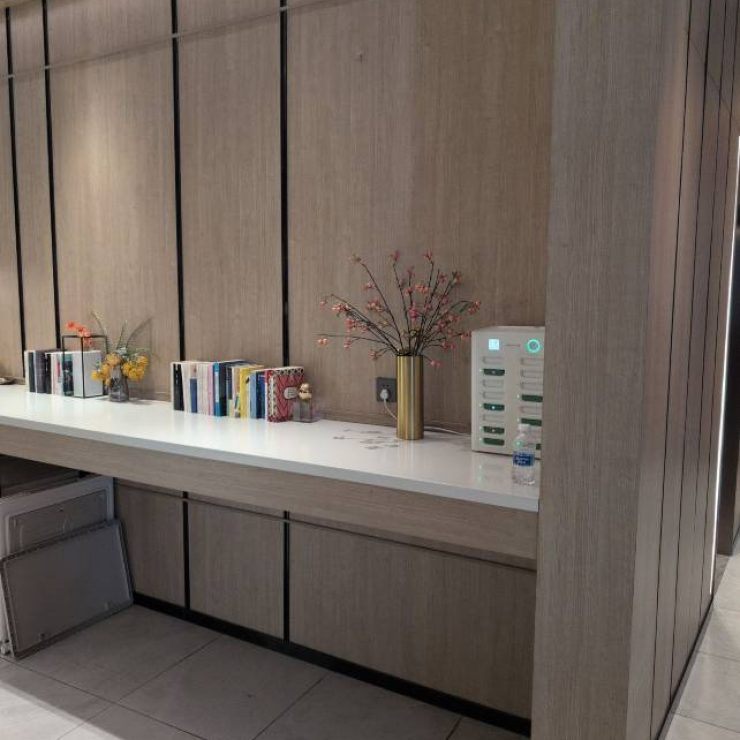
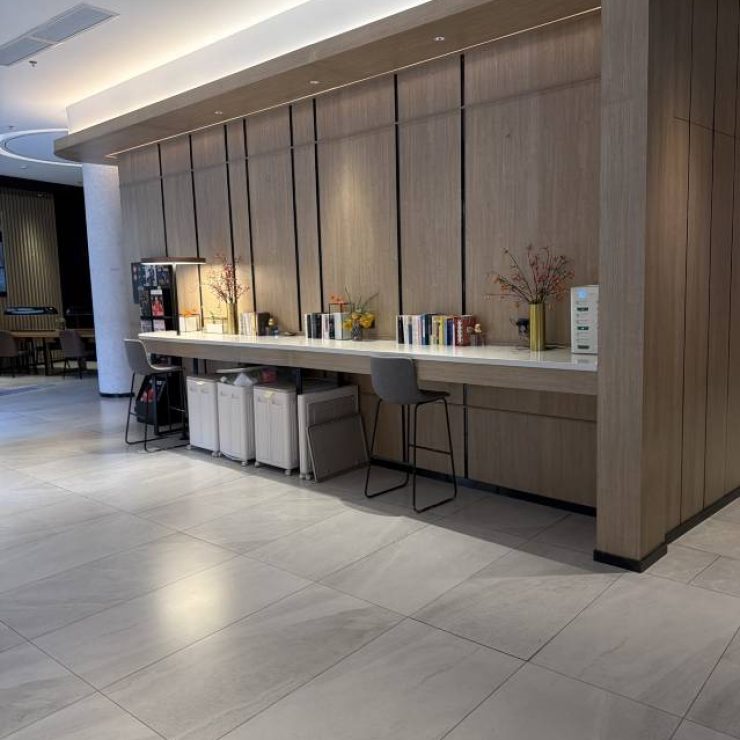
| Hotel Chalet smart-home room interior | On-site | 21:00 (night lighting) | 23mm f/1.4 | Interior, lifestyle |
🌆 The Bund at Golden Hour — The Canonical Shot
The single most photographed view in Shanghai is the Bund waterfront looking across the Huangpu River to the Pudong skyline. The shot combines the 1920s-era historic Bund buildings in the foreground with the 21st-century Pudong skyline (Oriental Pearl Tower, Shanghai Tower, Jin Mao Tower, World Financial Center) across the river.
Best shooting position
- 📍 The Bund waterfront between Nanjing Road East and Jinling East Road (the middle 800 meters of the promenade) — the most crowded but the most iconic.
- 📍 The Garden Bridge (Waibaidu Bridge) at the north end — the bridge itself is a famous photo subject, and the view south over the full Bund is one of the best in Shanghai.
- 📍 The South Bund near Shiliupu Pier — dramatically less crowded, same view.
Camera settings
- 🌅 Sunset (autumn 17:15–17:45): Aperture f/8, shutter 1/60s, ISO 200. The sky is bright; the skyline is not yet lit.
- 🌃 Golden hour (autumn 18:00–18:30): Aperture f/8, shutter 1/15s, ISO 400. Skyline fully illuminated, sky deep blue. Brace against a railing or use a tripod.
- 🌌 Blue hour (autumn 18:30–19:00): Aperture f/8, shutter 1–4 seconds, ISO 100. Tripod required. River reflections at their best.
🐉 Yu Garden Dragon Wall — The Detail Shot
The dragon walls at Yu Garden are the most photogenic architectural detail in Shanghai. The walls are topped with mosaic dragons — each with a writhing, undulating body of glazed tiles, each with only three claws (not the imperial five-claw dragon).
Best shooting position
- 📍 The writhing dragon wall near the Sansui Hall — the most photographed of the four dragon walls. Shoot from below to capture the dragon against the sky.
- 📍 The Grand Rockery from the eastern entrance — the 12-meter artificial mountain is a masterpiece of Chinese landscape design. Shoot in the afternoon side light.
- 📍 The Huxinting Teahouse from the zigzag bridge — the teahouse on its island in the koi pond is one of the most iconic Shanghai images. Shoot in late afternoon light.
Camera settings
- 🐉 Dragon wall detail: 56mm or 85mm prime, aperture f/2.8–f/4, shutter 1/250s, ISO 200. Afternoon side light is the best.
- ⛰️ Grand Rockery: 24mm wide, aperture f/8, shutter 1/125s, ISO 200. Afternoon side light.
- 🍵 Huxinting Teahouse: 35mm prime, aperture f/5.6, shutter 1/125s, ISO 200. Late afternoon.
🌃 Nanjing Road Neon — The Street Shot
Nanjing Road Pedestrian Street at night is a street-photography paradise — neon signs on every storefront, crowds of shoppers, street performers, and the constant flow of light and motion.
Best shooting position
- 📍 Anywhere along the 1.2 km pedestrian section — the neon is consistent along the whole stretch.
- 📍 The intersection of Nanjing Road and Middle Henan Road — the brightest neon concentration on the street.
- 📍 The Pop Mart Global Flagship Store at 730 m from Hotel Chalet — the store’s exterior lighting is genuinely photogenic.
Camera settings
- 🌃 Static neon shot: 23mm wide, aperture f/4, shutter 1/60s, ISO 800–1600. Image stabilization on.
- 🚶 Motion-blur people walking: 23mm wide, aperture f/8, shutter 1/8s, ISO 400. Brace against a wall. Creates ghosted-motion people against sharp neon.
- 👤 Candid portrait with neon: 56mm prime, aperture f/1.4, shutter 1/60s, ISO 1600. Shoot wide-open for shallow depth of field that blurs the neon into a colorful background.
🤝 Photography Etiquette in Shanghai
- No photography in metro stations — specifically the platform and trackside areas. Photography in the station concourse and ticketing hall is fine.
- No photography in theaters during performances. Photography before the performance and during curtain call is usually allowed.
- Respect “no photography” signs in museums. Special exhibitions at Shanghai Museum often prohibit photography — check signage.
- Do not photograph other people’s children without parental consent. Chinese Civil Code protects portrait rights.
- Buy something before photographing market stalls — it is both polite and gives you a genuine interaction to photograph.
- No flash in any animal area — this applies to Yu Garden koi pond and any place with animals (mainly relevant if you visit the Shanghai Zoo or Wild Animal Park).
- Be respectful at religious sites. Photography is usually fine in Taoist and Buddhist temples, but ask before photographing worshippers or ceremonies.
🎨 A Simple Editing Workflow
You do not need a complex editing workflow for Shanghai photos. Our recommended process:
- Cull in-camera or in-phone. Delete the obvious failures immediately. Aim to keep 10% of frames.
- Edit in Lightroom Mobile (free) or Apple Photos. Both handle the bulk of the work — exposure, contrast, white balance, crop.
- Apply a single consistent preset. A warm, slightly saturated preset works for the Bund and the Yu Garden dragon walls. A cooler, less saturated preset works for the morning People’s Square shots.
- Do not over-edit the Bund golden hour shot. The light is the magic; preserve it.
- Backup to cloud storage every evening. Hotel Chalet Wi-Fi is consistently 50–100 Mbps — there is no excuse not to.
For more on how to fit a photography walk into a longer Shanghai itinerary, see our 24-hour itinerary and our 48-hour weekend itinerary. For the best Bund evening walk route to combine with photography, see 🌃 와이탄 관광 터널 및 호텔 샬레에서의 저녁 산책. For seasonal considerations that affect the best light, see 🌦️ 시즌별 상하이 시즌: 최고의 경험을 위해 방문해야 할 시기.